



Successful Cases
AIRHORSE
Powerful Performance, Eco-Pioneering Spirit—Airhorse 7.5kW Screw Blower Delivers Clean, Stable Power to a Sichuan Wastewater Treatment Plant
In the wastewater treatment industry, biochemical treatment processes constitute the core of the entire water purification workflow. Among the most critical operational prerequisites for these processes is a continuous and stable aeration and oxygen supply system.
Through the use of blowers, the aeration system delivers air into aeration tanks, providing microorganisms with an ample supply of oxygen to facilitate the decomposition and transformation of organic pollutants. Should this process suffer from insufficient air supply, pressure fluctuations, or equipment downtime, it would directly compromise microbial activity—consequently leading to diminished treatment efficiency and even posing a risk that the quality of the treated effluent fails to meet regulatory standards.
Unlike general industrial air supply applications, the wastewater treatment sector imposes distinct requirements on blower systems: they must operate continuously over extended periods, maintain a stable airflow output, and simultaneously minimize energy consumption—as the aeration system itself typically accounts for a significant proportion of a wastewater treatment plant's total energy usage.
Consequently, within the wastewater treatment industry, blower systems have long since evolved beyond being mere auxiliary equipment; they now serve as core power units that critically determine both the quality of treated water and operational costs.
Background: System Upgrade Requirements
A specific wastewater treatment plant in Sichuan is primarily responsible for the centralized treatment of regional domestic sewage and a portion of local industrial wastewater. As urban development progresses and environmental standards continue to rise, the facility's original aeration system gradually began to reveal operational bottlenecks.
Throughout its long-term operation, the original blower equipment exhibited several issues, including insufficient flexibility in airflow regulation, high energy consumption, and diminished operational stability resulting from equipment aging. This was particularly problematic under operating conditions characterized by significant load fluctuations, where the system struggled to rapidly adapt to actual aeration demands, making it difficult to strike a balance between energy efficiency and treatment efficacy.
Furthermore, wastewater treatment is a sector characterized by continuous operations; any instability within the blower system can directly compromise the stability of the biochemical treatment tanks, thereby negatively impacting overall effluent quality indicators.
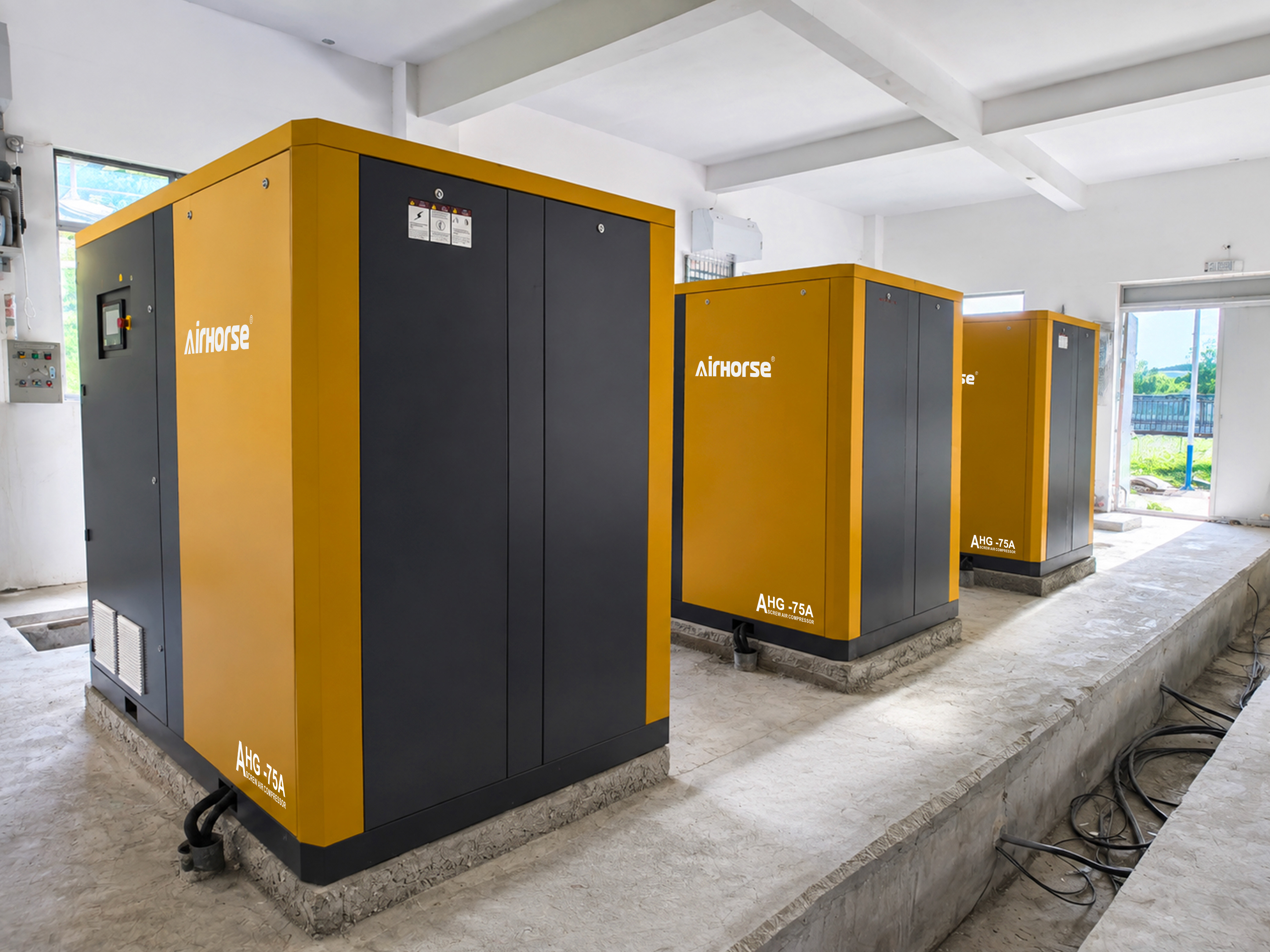
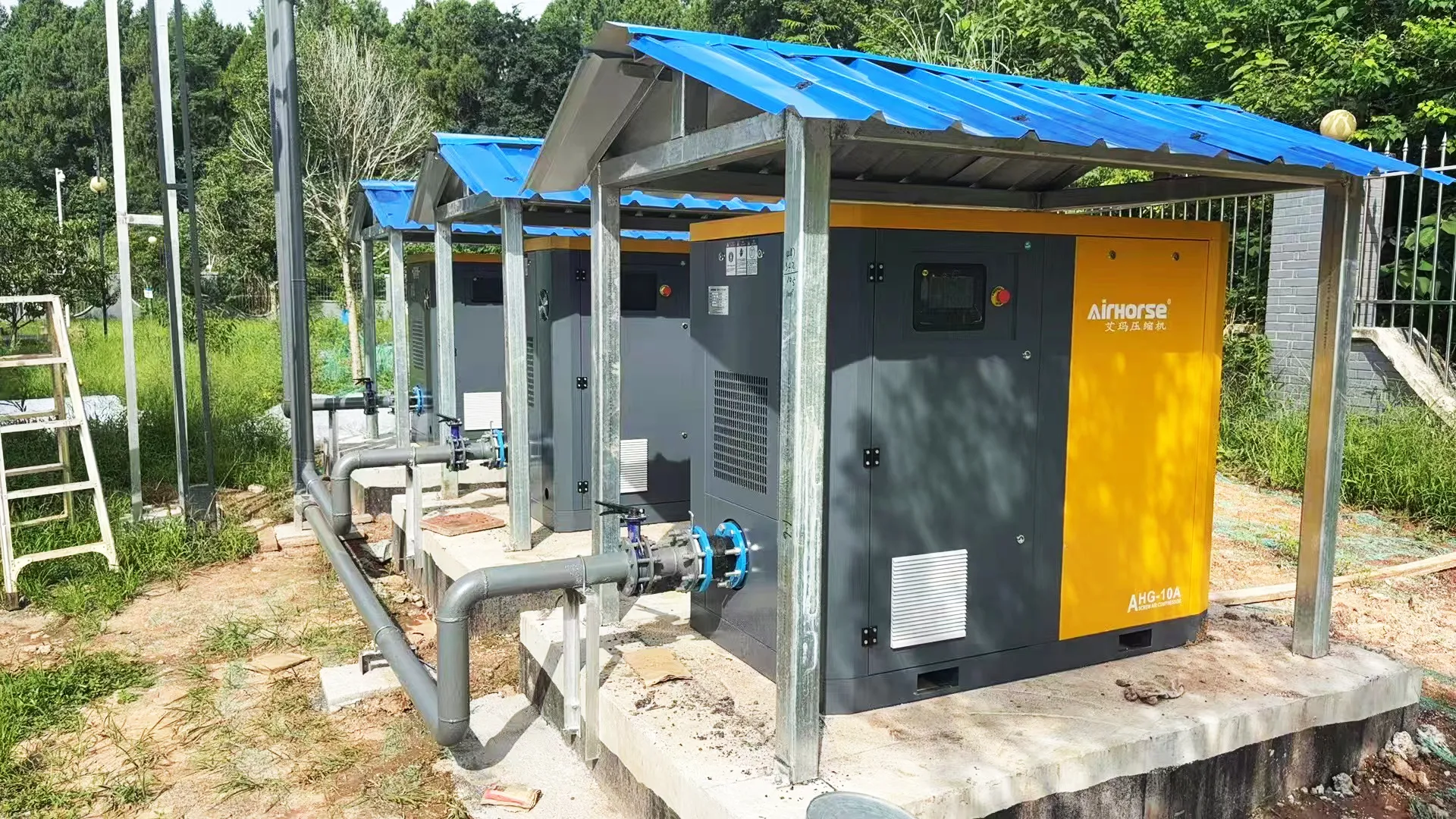
Following multiple rounds of solution evaluation and on-site operational analysis, the wastewater treatment plant ultimately opted to install three 7.5kW oil-free screw blower systems from Airhorse. These units were deployed to replace the facility's original aeration air supply equipment, providing the biochemical treatment tanks with more stable, clean, and efficient power support for aeration.
Oil-Free Screw Air Compressors: Meeting the Demand for Clean Air Supply in Aeration Systems
In wastewater treatment aeration systems, the air supply must not only be stable but also remain clean. Particularly within biochemical reaction tanks, the introduction of any oil contaminants or impurities into the system could disrupt the microbial environment, thereby compromising treatment efficiency.
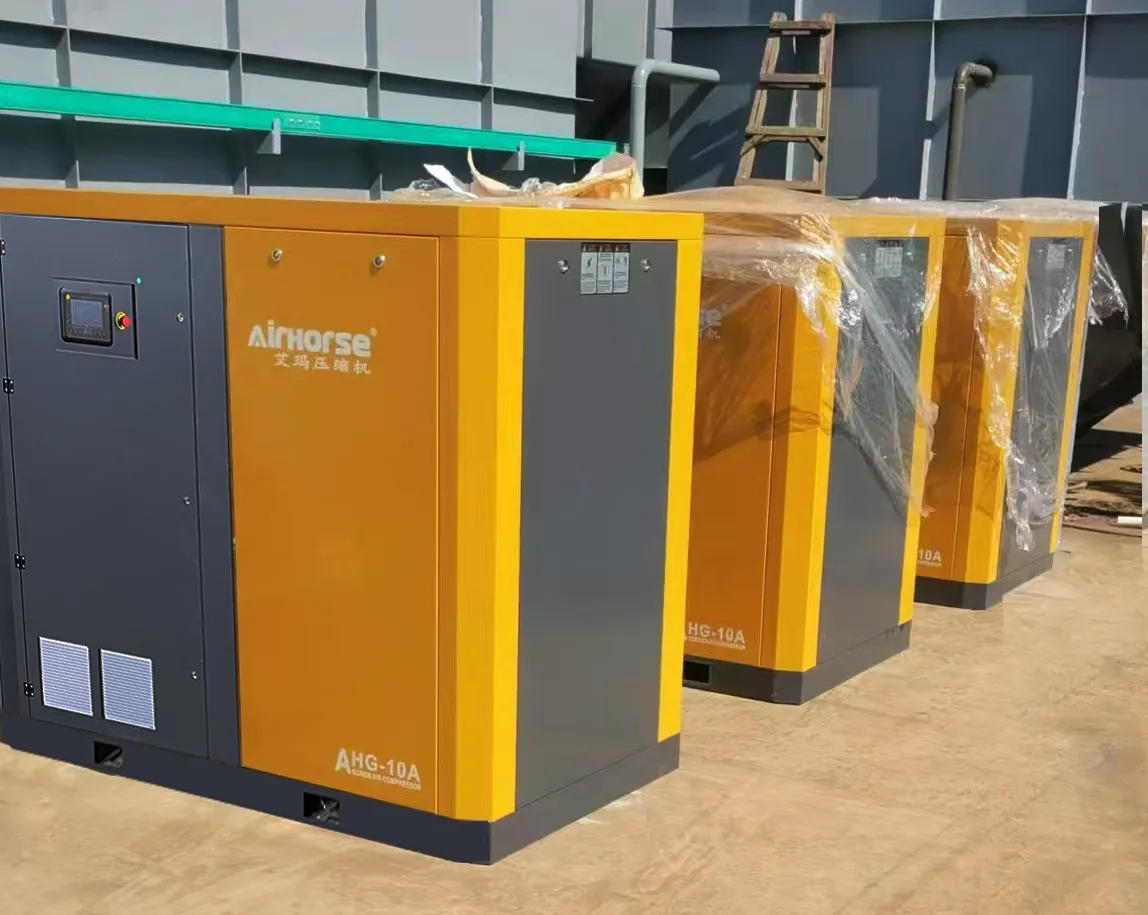
While certain traditional blower systems face the risk of lubricant contamination during prolonged operation, the Airhorse oil-free screw blower employs oil-free compression technology to eliminate oil contamination issues at the source, thereby ensuring cleaner and more stable output air.
Furthermore, the system features an optimized structural design for its gas compression path, resulting in a more continuous and uniform airflow output—a characteristic that is ideally suited to the operational requirements of the wastewater treatment industry, specifically the need for long-term, stable aeration.
Adapting to Fluctuating Load Conditions in Wastewater Treatment Plants
A characteristic feature of wastewater treatment plants is the inherent variability of influent loads, resulting in significant disparities in aeration demand between peak morning and evening hours and off-peak periods. If a single-unit operating mode is employed, a mismatch between energy consumption and actual demand can easily arise.
This project utilizes a system comprising three 7.5 kW oil-free screw blowers, enabling the automatic adjustment of the number of active units and load distribution in response to actual aeration requirements.
During low-load periods, the system automatically reduces the number of operating units to minimize energy consumption; conversely, during high-load phases, it automatically brings additional units online to ensure adequate aeration intensity. This operational strategy allows the entire system to achieve more efficient energy utilization while simultaneously maintaining effective treatment performance.
Stable Operation: Ensuring the Continuity of Biochemical Systems
In the wastewater treatment process, the stability of the biochemical system relies heavily on the aeration system's ability to provide a continuous supply of air. Should the blower equipment experience fluctuations or unexpected downtime, the microbial environment is rapidly compromised, resulting in a prolonged recovery period.
Airhorse oil-free screw blowers possess robust continuous-operation capabilities, maintaining a stable airflow output even under prolonged operating conditions. Furthermore, the equipment operates with minimal vibration—ensuring smoother overall performance—which contributes to enhanced long-term system reliability.
For an industry like wastewater treatment—where operations "cannot stop" and "must not falter"—this inherent stability constitutes a core value in itself.
Intelligent Control: Enabling Precision Management of Aeration
The Airhorse blower system is equipped with an intelligent control module capable of real-time monitoring of system operational status—including key parameters such as pressure, flow rate, temperature, and equipment load.
The system dynamically adjusts its operation based on the actual requirements of the aeration tank, ensuring that airflow output aligns precisely with the rhythm of the biochemical treatment process. This effectively eliminates the issues of "over-aeration" or "under-aeration"—problems commonly encountered in traditional systems.
Furthermore, the system features built-in operational safeguards and fault warning capabilities, effectively mitigating the risk of sudden shutdowns and ensuring the continuous, stable operation of the wastewater treatment process.
Application: Stable Operation in Multi-Regional Wastewater Projects
Airhorse oil-free screw blowers effectively address three core requirements—stability, energy efficiency, and purity—making them the preferred solution for an increasing number of wastewater treatment plants undergoing upgrades and modernization.
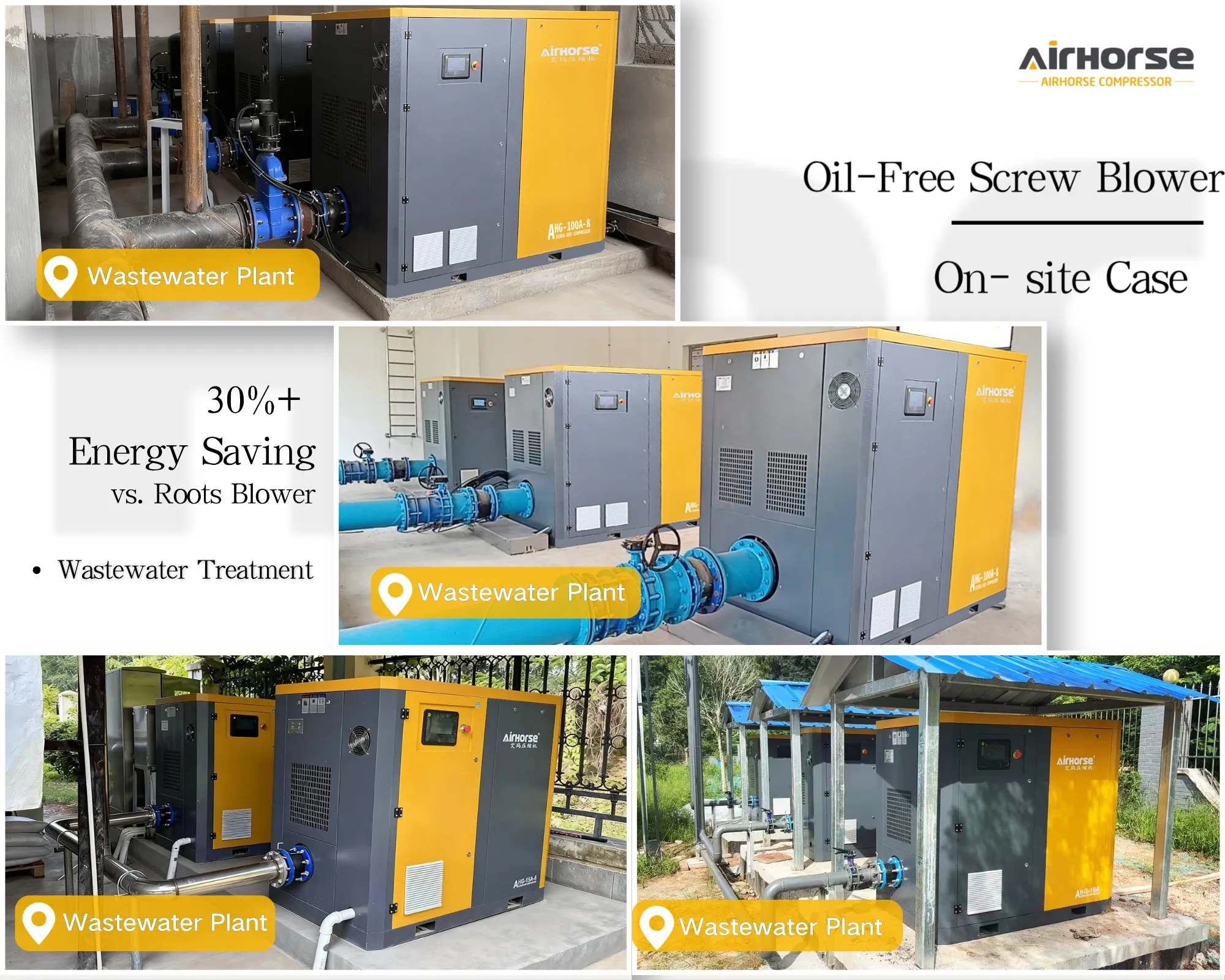
Currently, Airhorse compressor blower systems have been successfully deployed in wastewater treatment projects across various regions, including Hainan, Guangxi, and Guangdong, providing continuous, stable, and clean aeration power support to facilities of all scales. Long-term operational experience across diverse regions and under varying working conditions has further validated the system's reliability in terms of continuous operational stability and energy-saving performance.
Conclusion: Upgrading from Aeration Equipment to Core Process Systems
In the wastewater treatment industry, blower systems are no longer merely standalone pieces of equipment; rather, they constitute a core process unit that directly impacts the efficiency of biochemical treatment and the quality of the effluent.
Through their stable output, oil-free purity, and intelligent control capabilities, three 7.5kW oil-free screw blower systems from Airhorse have provided a wastewater treatment plant in Sichuan with a more reliable source of aeration power. This implementation marks a significant upgrade—transforming the facility's aeration infrastructure from "traditional air supply equipment" into a "process-critical aeration system."
If your wastewater treatment project is currently facing challenges such as:
Unstable aeration
Compromised effluent quality
Excessively high energy consumption
Aging equipment
Unreliable operation
The need for stricter standard compliance, retrofitting, or capacity expansion
We invite you to contact the Airhorse team. We offer the following services:
👉 Aeration system operational assessments
👉 Design of energy-saving retrofit solutions
👉 Optimization strategies for blower system selection
Powerful Performance, Eco-Pioneering Spirit—Airhorse 7.5kW Screw Blower Delivers Clean, Stable Power to a Sichuan Wastewater Treatment Plant
In the wastewater treatment industry, biochemical treatment processes constitute the core of the entire water purification workflow. Among the most critical operational prerequisites for these processes is a continuous and stable aeration and oxygen supply system.
Through the use of blowers, the aeration system delivers air into aeration tanks, providing microorganisms with an ample supply of oxygen to facilitate the decomposition and transformation of organic pollutants. Should this process suffer from insufficient air supply, pressure fluctuations, or equipment downtime, it would directly compromise microbial activity—consequently leading to diminished treatment efficiency and even posing a risk that the quality of the treated effluent fails to meet regulatory standards.
Unlike general industrial air supply applications, the wastewater treatment sector imposes distinct requirements on blower systems: they must operate continuously over extended periods, maintain a stable airflow output, and simultaneously minimize energy consumption—as the aeration system itself typically accounts for a significant proportion of a wastewater treatment plant's total energy usage.
Consequently, within the wastewater treatment industry, blower systems have long since evolved beyond being mere auxiliary equipment; they now serve as core power units that critically determine both the quality of treated water and operational costs.
Background: System Upgrade Requirements
A specific wastewater treatment plant in Sichuan is primarily responsible for the centralized treatment of regional domestic sewage and a portion of local industrial wastewater. As urban development progresses and environmental standards continue to rise, the facility's original aeration system gradually began to reveal operational bottlenecks.
Throughout its long-term operation, the original blower equipment exhibited several issues, including insufficient flexibility in airflow regulation, high energy consumption, and diminished operational stability resulting from equipment aging. This was particularly problematic under operating conditions characterized by significant load fluctuations, where the system struggled to rapidly adapt to actual aeration demands, making it difficult to strike a balance between energy efficiency and treatment efficacy.
Furthermore, wastewater treatment is a sector characterized by continuous operations; any instability within the blower system can directly compromise the stability of the biochemical treatment tanks, thereby negatively impacting overall effluent quality indicators.
Following multiple rounds of solution evaluation and on-site operational analysis, the wastewater treatment plant ultimately opted to install three 7.5kW oil-free screw blower systems from Airhorse. These units were deployed to replace the facility's original aeration air supply equipment, providing the biochemical treatment tanks with more stable, clean, and efficient power support for aeration.
Oil-Free Screw Air Compressors: Meeting the Demand for Clean Air Supply in Aeration Systems
In wastewater treatment aeration systems, the air supply must not only be stable but also remain clean. Particularly within biochemical reaction tanks, the introduction of any oil contaminants or impurities into the system could disrupt the microbial environment, thereby compromising treatment efficiency.
While certain traditional blower systems face the risk of lubricant contamination during prolonged operation, the Airhorse oil-free screw blower employs oil-free compression technology to eliminate oil contamination issues at the source, thereby ensuring cleaner and more stable output air.
Furthermore, the system features an optimized structural design for its gas compression path, resulting in a more continuous and uniform airflow output—a characteristic that is ideally suited to the operational requirements of the wastewater treatment industry, specifically the need for long-term, stable aeration.
Adapting to Fluctuating Load Conditions in Wastewater Treatment Plants
A characteristic feature of wastewater treatment plants is the inherent variability of influent loads, resulting in significant disparities in aeration demand between peak morning and evening hours and off-peak periods. If a single-unit operating mode is employed, a mismatch between energy consumption and actual demand can easily arise.
This project utilizes a system comprising three 7.5 kW oil-free screw blowers, enabling the automatic adjustment of the number of active units and load distribution in response to actual aeration requirements.
During low-load periods, the system automatically reduces the number of operating units to minimize energy consumption; conversely, during high-load phases, it automatically brings additional units online to ensure adequate aeration intensity. This operational strategy allows the entire system to achieve more efficient energy utilization while simultaneously maintaining effective treatment performance.
Stable Operation: Ensuring the Continuity of Biochemical Systems
In the wastewater treatment process, the stability of the biochemical system relies heavily on the aeration system's ability to provide a continuous supply of air. Should the blower equipment experience fluctuations or unexpected downtime, the microbial environment is rapidly compromised, resulting in a prolonged recovery period.
Airhorse oil-free screw blowers possess robust continuous-operation capabilities, maintaining a stable airflow output even under prolonged operating conditions. Furthermore, the equipment operates with minimal vibration—ensuring smoother overall performance—which contributes to enhanced long-term system reliability.
For an industry like wastewater treatment—where operations "cannot stop" and "must not falter"—this inherent stability constitutes a core value in itself.
Intelligent Control: Enabling Precision Management of Aeration
The Airhorse blower system is equipped with an intelligent control module capable of real-time monitoring of system operational status—including key parameters such as pressure, flow rate, temperature, and equipment load.
The system dynamically adjusts its operation based on the actual requirements of the aeration tank, ensuring that airflow output aligns precisely with the rhythm of the biochemical treatment process. This effectively eliminates the issues of "over-aeration" or "under-aeration"—problems commonly encountered in traditional systems.
Furthermore, the system features built-in operational safeguards and fault warning capabilities, effectively mitigating the risk of sudden shutdowns and ensuring the continuous, stable operation of the wastewater treatment process.
Application: Stable Operation in Multi-Regional Wastewater Projects
Airhorse oil-free screw blowers effectively address three core requirements—stability, energy efficiency, and purity—making them the preferred solution for an increasing number of wastewater treatment plants undergoing upgrades and modernization.
Currently, Airhorse compressor blower systems have been successfully deployed in wastewater treatment projects across various regions, including Hainan, Guangxi, and Guangdong, providing continuous, stable, and clean aeration power support to facilities of all scales. Long-term operational experience across diverse regions and under varying working conditions has further validated the system's reliability in terms of continuous operational stability and energy-saving performance.
Conclusion: Upgrading from Aeration Equipment to Core Process Systems
In the wastewater treatment industry, blower systems are no longer merely standalone pieces of equipment; rather, they constitute a core process unit that directly impacts the efficiency of biochemical treatment and the quality of the effluent.
Through their stable output, oil-free purity, and intelligent control capabilities, three 7.5kW oil-free screw blower systems from Airhorse have provided a wastewater treatment plant in Sichuan with a more reliable source of aeration power. This implementation marks a significant upgrade—transforming the facility's aeration infrastructure from "traditional air supply equipment" into a "process-critical aeration system."
If your wastewater treatment project is currently facing challenges such as:
Unstable aeration
Compromised effluent quality
Excessively high energy consumption
Aging equipment
Unreliable operation
The need for stricter standard compliance, retrofitting, or capacity expansion
We invite you to contact the Airhorse team. We offer the following services:
👉 Aeration system operational assessments
👉 Design of energy-saving retrofit solutions
👉 Optimization strategies for blower system selection